
The C Word
Wednesday, January 22, 2025


Last week, I went to hear Tyler Merritt speak about his new book This Changes Everything: A Surprisingly Funny Story About Race, Cancer, Faith, and Other Things We Don’t Talk About. I received a signed copy of the book that night and read it in the subsequent days (it was great, you should read or listen to it). What has stayed with me in the days since finishing the book are Tyler’s honesty and vulnerability. You’ll have to read the book to get the full impact, but being diagnosed with cancer changed the way he lives and the way he thinks about living.
Is there a diagnosis or event that has changed your view of your life and the way you live it? What have been the positive and negative repercussions?
The day before Thanksgiving 2018, I received the call that I had cancer. A few weeks prior during a standard MRI screening, a spot was found in my left breast. The day of that screening had been a rough one. I arrived at my appointment to find out I had been scheduled with a different provider than my regular one. The wait between MRI and seeing the provider was a long one. I went home disgruntled and frustrated. It’s never fun to spend half of a day at the breast center.
Even so, I was surprised by the call from my regular provider a few days later. She began by apologizing for not being the one to see me. I naïvely thought this was the reason she was calling. Instead, she told me about the spot. She was optimistic, but wanted a biopsy to make sure it was nothing. It’s good that she took the precaution of a biopsy because it wasn’t nothing: it was DCIS — ductal carcinoma in situ.
I want to pause here and say that no cancer diagnosis is nothing. I have sometimes felt like my cancer story isn’t a “real” cancer story. It was caught very early (between stage zero and stage one). I avoided chemotherapy. I had one cancer-related surgery. It could have been much worse. But it was still cancer. And it is my story, so I want to share my story with you in hopes you can glean something from it.
Is there a transformative story in your life that you feel you can’t tell because of others’ experiences?

My diagnosis came days before my forty-fifth birthday. While it’s an odd thing to celebrate, this brought some benefits. A breast cancer diagnosis while younger than forty-five put me in a higher risk category, which ensured that I would continue to be monitored every six months by either MRI or mammogram. It also means my daughters will be entitled to be screened from a young age (ten years before my own diagnosis).
Had I not been in a high risk category to begin with, my cancer would have grown for months (maybe years?) before detection. I know this because after the biopsy, I had a mammogram. Even with the marker placed during the biopsy nothing was visible on the mammogram - not to the technician, not to the radiologist, not to me. The tumor was too small to be detected by mammogram. The surgery would later show that small tumor was growing. While the cancer was contained to a duct during the MRI, it had metastasized beyond the duct by the time of my partial mastectomy.
Many things were going on in my mind while this was happening in my body.
I felt betrayed by my body. How could I have had no inkling that my own cells had begun mutating in an attempt to kill me? How could I trust a body that did the opposite of what it was “supposed to do” - which in my mind was stay alive?
I felt my mortality keenly. I remember driving along in my neighborhood approaching a stop sign. “I could be hit by another car and die right now,” I thought to myself. While this thought was true, it’s not one that occurred to me pre-cancer.
Have you had a bodily experience that altered the way your mind perceived reality and your body? How did your body and mind relate then? How do they now?
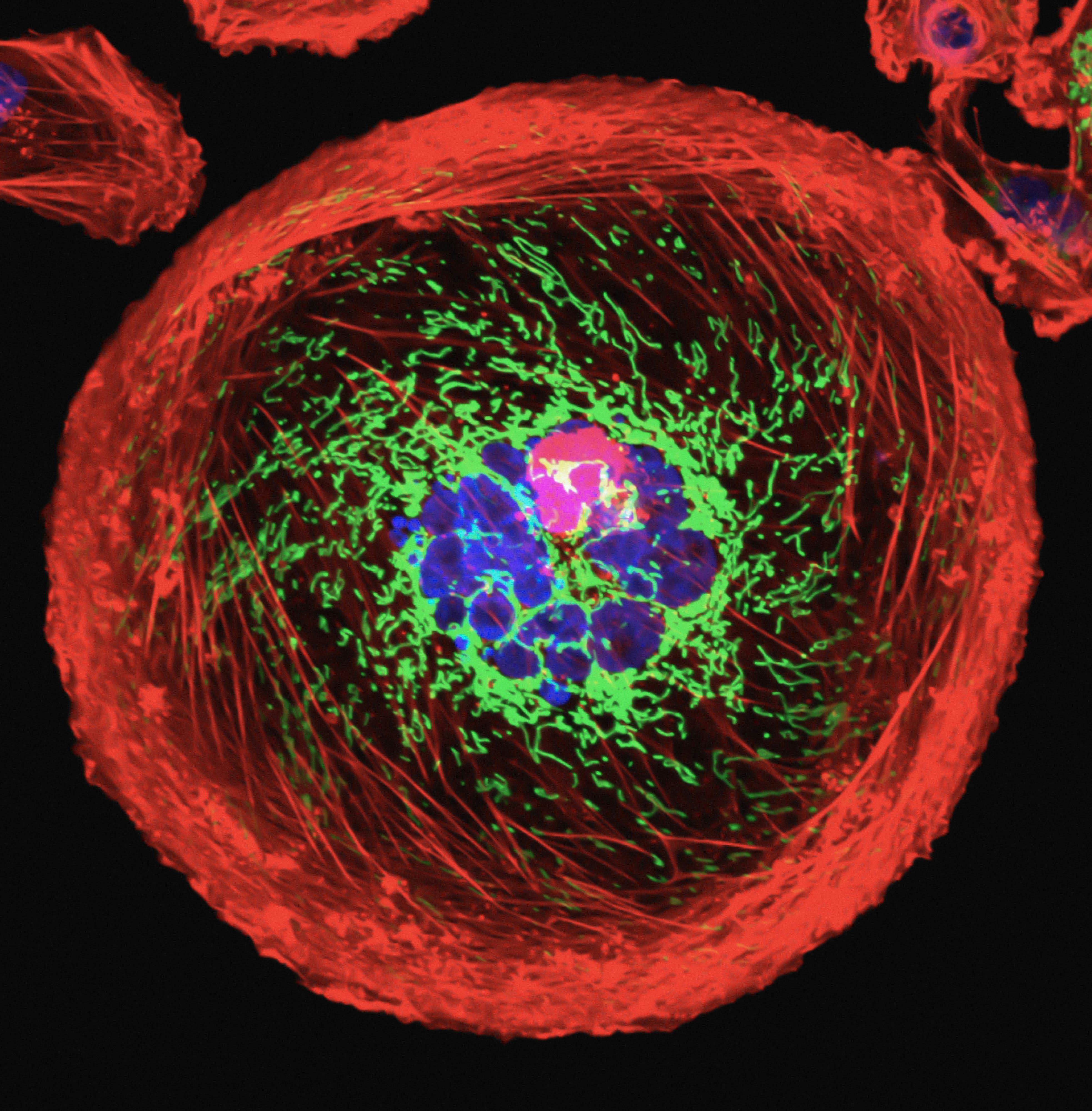
Here’s the thing: because my cancer was caught early, it was never visible to those around me that I was in cancer treatment. My hair never fell out. I recovered from surgery during Christmas break when I wasn’t working. To the casual observer, nothing had changed for me.
But life felt different. I felt different.
Radiation isn’t something I would recommend if you can avoid it, but the worst parts of it weren’t physical. The worst parts were the waiting to receive the treatment. My final week of treatment, I waited at least an hour past my appointment time every. single. day. It was not easy to sit in the windowless basement for twenty-one days straight and remember that I had cancer. The three week treatment span was a daily reminder that I may have looked healthy from the outside, but there were cells we were trying to kill by blasting them with radiation.
During this season of my life, a dear friend gave me the book Kitchen Table Wisdom. The author describes encouraging her patients to visualize their bodies fighting their ailments. Every time I was on the radiation table, I pictured a row of baby trees. When the radiation blast began, I pictured the trees bending in a storm gale. In my imagination the strong trees stayed rooted, but the dangerous cells were blasted into disintegration.
My cancer and its treatment were over in less than six months. But in my experience, a cancer story never really ends. Every little change to one of my breasts causes anxiety and there were many ripple effects from both diagnosis and treatment. My cancer was estrogen positive, so I had to immediately stop taking birth control. I was prescribed tamoxifen to reduce my risk of recurrence. My body tolerated the medicine well everywhere except my uterus. This led to a series of smaller procedures and ultimately a hysterectomy.
My body and mind are forever changed by cancer.
In the right light, I can see that having cancer wasn’t all bad. I had it when I was young enough and healthy enough to recover fairly easily. I had it late enough that I was able to carry three pregnancies full term. The high risk from my family history gave me a degree of protection through heavier screening.
I think about death differently as a result of having had cancer: it could come for me at any moment. Am I living fully while I can?
I know the exterior of my body only tells part of the story of my body’s experiences. Can I make peace with a fifty-two year old body that bears some scars and weight from all it survived?
I have experienced life in the radiation basement, out of sight of many. Am I moving through life with a desire and willingness to see the overlooked?
I hope you haven’t had cancer. I hope you never will. But if you know someone who walks this path, I hope you will have the courage to listen to their stories. If you walk this path, I hope you will have the courage to share your own story.
Culturally, we are loathe to discuss death and dying. Yet every single one of us will die. This much I know is true.
How are you living in a way that fully claims the gift of the life you’ve been given?

Book Corner:
What I’ve Been Reading Lately
via Library Loan:
Assembly by Natasha Brown
I found this book on a list of short books that pack a punch. Assembly lived up to that. I liked the way the narrator looked at her life and made bold decisions. I’m not many pages, there was a lot said about our world. I gave it three stars instead of four because I struggled a bit with the writing style (but that style served the story).
This Country: Searching for Home in (Very) Rural America by Navied Mahdavian
As someone who left the suburbs for a more rural setting less than a year ago, this book felt hopeful and melancholy. I loved the adventurous spirit, the capacity for learning and the ability to look for community in less than obvious places. I don’t disagree with the decision Navied and Emilie made at the end of their time in Idaho, but I wish our country was more hospitable to all its residents.
Headshot by Rita Bullwinkel
A novel about eight young women boxers? Why did I request this from the library? I’m not sure where I read about this book, but I’m glad I read a chapter before sending it back to the library. (I am drowning in library books at the moment.) After sampling one chapter, I kept reading. Headshots tells a unique story in a unique style. While I don’t have any particular interest in boxing, I loved the way the bouts were told with the inner dialogue of each character along with the action. This is a book about much more than boxing. In some ways it’s about all of the many and varied ways to be a young woman today.
from my own library:
This Changes Everything by Tyler Merritt
This book is as delightful as its author. Tyler and I share some characteristics: we are both Alabama fans (Roll Tide!), we were both diagnosed with cancer at age 44, we are both survivors who were changed by our cancer encounter. I loved Merritt's heart in this book and his willingness to bare his soul for his readers. The way he wrote about his faith brought tears to my eyes and recognition to my heart. If you're a fan of I Take My Coffee Black, this one will not disappoint. If you haven't read that book, listen to it immediately and then move on to this one.
May reading snippets of my cancer story embolden you to tell your own story or listen to the story of others. We need not fear cancer or other trials - Jesus said, “I have told you these things, so that in me you may have peace. In this world you will have trouble. But take heart! I have overcome the world.” If he has overcome the world, we need not fear.
In hope and love,
Shannon
Beautiful. Thank you for sharing about your cancer journey. And thank you for asking such thoughtful questions. This past couple of years I've had some challenging experiences that really left an impact on me. I'm still trying to find a way to think about them in a way that doesn't haunt me, and I hope one day I can find they have changed me for the better. Also...RTR...!!